Is Pressure Washing Safe for Vinyl Siding?
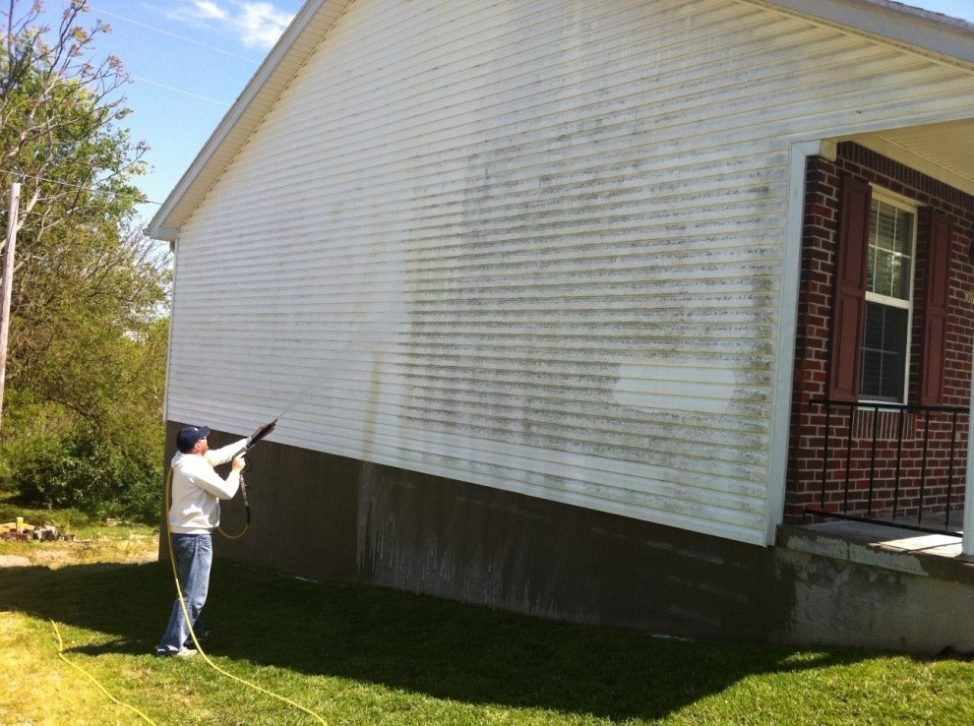
It's one of the most common questions we get from homeowners across the Triad: can you safely pressure wash vinyl siding, or will you wreck it? The honest answer is "it depends entirely on how it's done." The same machine that safely rinses a driveway can crack, warp, and flood the wall behind your siding if it's pointed there at full power.
The short answer
Vinyl siding can be cleaned with a pressure washer, but only at low pressure, with a wide-angle tip, and ideally with a detergent doing most of the work. High-pressure blasting is where the damage happens. That's why professionals lean on soft washing for siding, it gets a deeper, longer-lasting clean without the risk.
What high pressure actually does to vinyl
Vinyl is a thin, flexible panel that hangs on your wall in overlapping rows. Hit it wrong and a few things go bad fast:
- Water gets behind it. Siding isn't watertight, it sheds water from the outside. Aim a narrow, high-pressure stream upward under the laps and you push water into the wall cavity, where it soaks insulation and sheathing and invites mold.
- It cracks and chips. Older vinyl that's spent years in the Carolina sun gets brittle. A concentrated jet can crack panels and break the locking edges, so they rattle loose in the next storm.
- It dents and gouges trim. Soft accents, J-channel, and foam-backed panels mark easily under close-range pressure.
- It blasts off the wrong things. Caulk lines and aging paint on adjacent trim don't survive a direct hit.
Why soft washing is the better fit
Soft washing flips the approach: instead of relying on force, it relies on chemistry. A biodegradable detergent is applied at low pressure, given time to break down the algae and mildew living on the siding, and then rinsed away gently. Because the growth is killed rather than just knocked off, the siding stays clean far longer, typically a year or more here in the humid Piedmont, instead of greening up again in a few weeks. If you want the deeper comparison, we wrote a whole post on soft washing vs. pressure washing.
Signs your vinyl was cleaned the wrong way
If a previous wash did more harm than good, you'll often see the evidence:
- Hairline cracks or chips along the bottom edges of panels.
- Streaky "lines" etched into the surface where a wand was held too close.
- Loose or popped panels that move when you press them.
- Bubbling paint or soft spots on the wall, a clue that water got in.
A note on chalky, oxidized vinyl
Run your hand along older siding and you might pick up a white, chalky film. That's oxidation, the surface of the vinyl slowly breaking down under UV light. It's worth knowing before any cleaning: a wash removes dirt and biological growth and brightens things up, but it can't restore color to vinyl that has oxidized. Beware anyone who promises a high-pressure blast will make 20-year-old siding look new, that's exactly the pressure that causes damage, and it still won't reverse the chalking.
Should you DIY it?
Plenty of homeowners clean their own single-story siding with a garden hose and a soft brush, and that's genuinely fine for light dirt. The trouble starts when the growth is stubborn and the temptation is to rent a powerful machine and climb a ladder to reach the second story. That combination, high pressure, awkward angles, and height, is where most siding damage and most ladder injuries happen. A professional soft wash reaches the whole house safely from the ground.
The bottom line
So, is pressure washing safe for vinyl siding? At low pressure with the right technique, yes, but the smarter, longer-lasting choice is a soft wash that cleans without the risk. If your siding is looking green, gray, or just tired, we're happy to take a look and give you a straight answer about what it needs.
One last thing worth knowing: the "match the pressure to the surface" rule isn't just about siding. The same low-pressure logic protects your shingles, which is why we never blast a roof either, see our roof soft washing page for why. Hard surfaces like your driveway and concrete, on the other hand, can take real pressure and actually need it. Knowing which surface is which is most of the job.